Big Alcohol’s Weed Panic Isn’t Random: How Cannabis Beverages Are Quietly Cutting Into Drinking

Why Big Alcohol Suddenly Seems So Nervous About Weed Drinks

If you’ve noticed more hand-wringing headlines about cannabis making people “sick” or “out of control,” you’re not imagining it. While THC seltzers and hemp cocktails quietly move onto grocery lists and into fridges, a different story is playing out in boardrooms. Alcohol sales growth is slowing in some segments, cannabis beverages are gaining shelf space, and suddenly the loudest concern in the room is that weed might make you vomit. Funny how nobody panicked this much when hard seltzer was the new kid on the block.

You don’t need a conspiracy chart to understand the tension. For decades, alcohol has had the evening to itself: dinner, celebrations, “I survived today” rituals. Now, more adults want options. Some are swapping a nightcap for a low-dose THC drink. Others are managing pain or tension with cannabis instead of yet another round, as highlighted in the federally funded disability research we covered here: Cannabis Use Among People With Disabilities: New Study Finds Widespread Use for Pain and Tension Relief. When the routine changes, so do the spreadsheets.

At the same time, cannabis is still the punchline in a lot of public conversation. If a dispensary catches fire, everyone jokes about the town getting “high,” even though the real issue is smoke and air quality, not intoxication. We unpack that reflex in When a Dispensary Burns but a Pharmacy Doesn’t: What Our Jokes Say About Cannabis Culture. Put bluntly: cannabis gets treated like a cartoon, even while grown-ups quietly change what’s in their glass. That gap between the jokes and the data is exactly where Big Alcohol’s weed panic lives.

The Numbers Behind the Panic: When Cannabis Drinks Replace a Nightcap

Strip away the drama and the story becomes fairly simple: for some adults, cannabis beverages are functioning as a substitute for at least part of their alcohol use. A study in the Journal of Psychoactive Drugs explored this directly. Researchers found that people who use cannabis-infused beverages were more likely to say they’d substituted cannabis for alcohol and reported fewer weekly alcoholic drinks and less frequent binge drinking after making the switch. You can read the abstract here: The Exploration of Cannabis Beverage Substitution for Alcohol: A Novel Harm Reduction Strategy.

Other researchers are seeing the same pattern from different angles. A Brown University-led study on so-called “California sober” habits reported that using cannabis was associated with lower short-term alcohol intake in certain situations, suggesting that some people really do trade one for the other instead of stacking both on top of each other. Their writeup is here: As ‘California sober’ catches on, study suggests cannabis use reduces short-term alcohol consumption. NORML has highlighted similar findings, including a study showing that participants who used cannabis before drinking went on to consume significantly less alcohol than those who didn’t: Study: Using Cannabis Prior To Drinking Results in Significantly Less Alcohol Consumption.

None of this turns cannabis into a universal health hack. The studies are careful about limits: self-reported data, specific settings, no guarantee that everyone will drink less just because a THC drink is available. But when multiple research teams keep finding the same thing – some people swap cannabis for alcohol, and when they do, the number of drinks often drops – you can see why the beer-and-spirits executives might start watching the cannabis beverage aisle like a rival team warming up on their home field.

Follow the Incentives, Not the Outrage – and Choose Your Own Nightcap

Once you accept that cannabis beverages really are nibbling at alcohol’s market share, the panic pieces look less mysterious and more predictable. Of course an industry built on wine, beer, and spirits is going to push back when a new category threatens to steal evenings. Of course some talking points will lean heavily on worst-case anecdotes while gliding past substitution and harm reduction data. As we’ve written before, when politicians and pharma-aligned institutions suddenly line up on a cannabis issue, it pays to read the fine print instead of just the press release: When Politicians and Pharma Agree on Cannabis, It’s Time to Pay Attention.

None of that means alcohol is evil or cannabis is saintly. It simply means the incentives are clear. If some adults feel better swapping a couple of cocktails for a measured THC drink, alcohol companies have every reason to feel the pressure and shape the story. You don’t need secret meetings to get that outcome; you just need market share on the line. The rest is spin, and we’re all encouraged to pick a side before we’ve even seen the numbers.

For your own fridge, the choice can be a lot calmer than the headlines. Talk with a health professional if you have medical questions, know your limits, and decide what actually helps you unwind without wrecking tomorrow. Our lane at Crafty is simple: clearly labeled hemp-derived drinks and cocktail-inspired gummies, designed for adults in legal markets who are curious about having something besides alcohol in the rotation. While Big Alcohol wrestles with the trend lines, you get to treat cannabis beverages as what they are becoming for many people: one more grown-up option on the table, not a crisis in a can.

When a Dispensary Burns but a Pharmacy Doesn’t: What Our Jokes Say About Cannabis Culture

Same Smoke, Different Headlines: Pharmacy Fire vs. Dispensary Fire

Picture this: two small-town Main Streets on a cold winter morning. On one side of the country, a neighborhood pharmacy catches fire. On the other, a cannabis dispensary does. In both places, firefighters race in, streets close, and neighbors watch from behind yellow tape, clutching coffee cups and phones. The smoke from each building is a problem for lungs and air quality, not a punchline. Yet you can probably guess which fire gets treated like a setup for a joke.

When the pharmacy burns, the reaction is straightforward: “Hope everyone’s okay,” “Those poor workers,” “I wonder where we’ll get prescriptions now.” When the dispensary burns, headlines start winking. Social posts talk about the “highest town in America,” comments joke that everybody downwind is going to sleep like a baby or fail their next drug test. Same basic emergency, very different cultural script.

That script did not appear overnight. It grew out of decades of jokes, scare stories, and one-liners about “contact highs” and “weed smoke rolling across town.” Today, we also know that cannabis is part of real people’s lives in ways that are a lot less cartoonish: adults with disabilities using it for pain and tension relief, as shown in the new national survey we cover here: Cannabis Use Among People With Disabilities: New Study Finds Widespread Use for Pain and Tension Relief. Still, the old reflex shows up whenever smoke and cannabis share a sentence.

From Simpsons Gags to Small-Town Fires: How Pop Culture Wrote the Script

Pop culture has been training us to laugh at cannabis smoke for a long time. Think about how often you have seen the same gag: a big cloud of weed smoke drifts out, and suddenly everyone nearby is giggling, hungry, or oddly relaxed. The joke works because the audience already knows the shorthand — cannabis smoke is treated as almost magical, like a weather pattern with a punchline.

The Simpsons have leaned into that shorthand more than once. One famous bit has marijuana smoke looking just a little too inviting…

…and another shows the classic “old man yelling at cloud” energy that has hovered over cannabis debates for years:

Those scenes are funny because they exaggerate a feeling we already recognize. But the same reflex shows up when a real dispensary burns. Suddenly, the smoke over a small town is imagined as one big hotbox, even though what people are actually breathing is ordinary structure-fire pollution — the same mix of dust, soot and chemicals you would worry about if a pharmacy, furniture store, or warehouse went up in flames.

Meanwhile, everyday cannabis use is looking less like a joke and more like a lifestyle shift. One of our recent pieces found that one in three Americans now “pre-game” holidays with cannabis, often in the form of controlled, labeled hemp drinks instead of another round of cocktails: 1 in 3 Americans Now ‘Pre-Game’ Holidays With Cannabis: What It Means for Hemp Drinks & Family Stress. That’s a long way from the cartoon cloud drifting through town — and a good reminder that real life is more nuanced than the punchline.

Normal Businesses, Real Fires and a More Grown-Up Cannabis Conversation

In 2026, a dispensary fire is not a cosmic event. It is a business emergency. Staff evacuate, firefighters respond, and insurance paperwork gets thicker by the minute — just like it would for a small pharmacy, bakery, or hardware store. The cultural weirdness creeps in when cannabis is treated as the main character instead of one product on the shelves.

That same “main character” treatment shows up in policy, too. When politicians and pharma-adjacent institutions suddenly agree on a move like cannabis rescheduling, the headlines can feel triumphant while the details stay messy. In our breakdown, we talk about why it is smart to pay attention when powerful players line up on cannabis — and why the fine print still matters for banking, access and everyday consumers: When Politicians and Pharma Agree on Cannabis, It’s Time to Pay Attention.

So what does all this have to do with your fridge. As cannabis businesses become more ordinary — staffed by real people, inspected by regulators, and yes, vulnerable to the same accidents as everyone else — it helps to treat their products with the same grown-up perspective. For us at Crafty, that means focusing on clearly labeled, hemp-derived drinks and cocktail-inspired gummies for adults in legal markets who want a steady, predictable experience instead of a wild story. Fires should be rare and taken seriously, whether they happen in a pharmacy or a dispensary. The fun belongs in the glass or the gummy — not in the way we talk about someone else’s bad day.

When Politicians and Pharma Agree on Cannabis, It’s Time to Pay Attention

When Politicians and Pharma Suddenly Agree, It’s Time to Read the Fine Print

Every now and then, groups that usually fight like cats in a sack suddenly line up on the same side of an issue. That is your cue to stop, set the popcorn down, and look a little closer. Cannabis rescheduling is one of those moments. Medical organizations, pharmaceutical interests, political campaigns, and industry groups are all applauding the move to treat cannabis more like a medicine and less like contraband. On paper, that sounds like overdue common sense.

To be fair, there are real upsides to rescheduling. Moving cannabis into a lower schedule can make research easier, help legitimate businesses with brutal tax rules, and finally acknowledge what patients and caregivers have said for years: this plant has medical value. Studies of people with disabilities, for example, now show that many are already using cannabis to manage pain and tension in their daily lives. We covered that in more detail in our piece on new federally funded disability data: Cannabis Use Among People With Disabilities: New Study Finds Widespread Use for Pain and Tension Relief.

The catch is that big wins for patients, big wins for shareholders, and big wins for elected officials do not always arrive in the same package. When you see excitement from political strategists, pharmaceutical lobbyists, and corporate investors all at once, it is healthy to ask: who stands to gain the most, who is quietly left out, and what parts of the story are being written in the footnotes instead of the headline.

Pharma, Politics and the Parts of Cannabis Policy You Don’t See in the Ads

Pharmaceutical companies tend to like clear rules, patentable products, and the kind of research pathways that lead to billable prescriptions. Politicians tend to like policies that can fit on a campaign mailer. None of that is evil by itself, but it does shape how cannabis is framed. A technical change in scheduling can be sold as a sweeping victory, even when it leaves banking, criminal records, and access issues largely untouched.

Look at how banks talk about the same policy. The American Bankers Association, for example, has reminded everyone that rescheduling alone does not magically fix the legal gray area around serving cannabis businesses. In their own words, “any potential decision to reclassify cannabis has no bearing on the legal issues around banking it… cannabis would still be largely illegal under federal law, and that is a line many banks in this country will not cross.” You can read that statement in full here: ABA: SAFER Banking Act still needed even if administration moves to reclassify cannabis.

Meanwhile, ordinary adults are just trying to live their lives. Some are using cannabis to manage disability-related pain. Others are quietly trading a third cocktail for a low-dose hemp drink before stressful family gatherings, part of a broader shift we covered in 1 in 3 Americans Now ‘Pre-Game’ Holidays With Cannabis: What It Means for Hemp Drinks & Family Stress. When powerful institutions all nod in unison, it is worth remembering that the people most affected by these rules rarely get front-row seats in the press conference.

How to Stay Calm, Curious and Cautious While the Big Players Negotiate

So what is a reasonable adult supposed to do while politicians trade speeches and pharmaceutical companies weigh new product lines. The first step is not panic; the second is not blind trust. Read past the slogans. Ask what a policy actually changes on the ground: does it improve research, fix banking, clear old records, or simply make it easier for a few large players to dominate the market. Our breakdown of proposed federal hemp changes, for example, explains why some rules may be hard to enforce and what that means for everyday shoppers: Why the New Federal Hemp Ban May Be Unenforceable – And Why Stocking Up Now Makes Sense.

The next step is to keep real people at the center of the story. Patients managing chronic pain, adults trying to reduce alcohol use, caregivers navigating disability, and small business owners in legal states all live with the consequences of decisions made far from their kitchen tables. When politics and pharma line up around cannabis, it is smart to ask whether those voices are being protected, consulted, or simply counted as numbers in someone else’s projection.

As for Crafty, our lane is simple: provide clearly labeled, hemp-derived drinks and cocktail-inspired gummies for adults in legal markets who are looking for measured, low-key alternatives to alcohol. While the big institutions argue over scheduling, banking, and headlines, we focus on responsible dosing, transparency, and keeping the fridge-friendly side of cannabis as calm and predictable as possible. You keep reading the fine print; we will keep working on making sure the can in your hand lives up to what the label promises.

Cannabis Use Among People With Disabilities: New Study Finds Widespread Use for Pain and Tension Relief

Life with a disability often means juggling more than one kind of pain at a time: physical symptoms, emotional strain, and the everyday gymnastics of getting basic needs met in a world that is not built with accessibility first. So it is not shocking, only overdue, that a federally funded research team asked a straightforward question: how many adults with disabilities are using cannabis, and why. Using data from the 2023–2024 National Survey on Health and Disability, the authors found that roughly 22 percent of respondents currently use cannabis, and the most common reason was pain relief, followed closely by relaxing or easing tension. The study, published in the Disability and Health Journal, drilled down across different types of self-reported disability, including mobility, cognition, vision, independent living, self-care and hearing. Across those domains, people echoed similar reasons for reaching for cannabis: chronic pain, muscle spasms, migraines, nausea, sleep problems and mental health symptoms. If you like reading the source material instead of the rumor mill, you can find the abstract and details here: Reasons for cannabis use among adults with disabilities – Disability and Health Journal. Of course, the authors were careful about the limits of their work. The survey was self-reported, the sample leaned white, female, and college-educated, and it was not meant to represent every adult with a disability. But as a snapshot of real lives, it fits neatly with what many people quietly share with friends and caregivers: standard pain tools do not always do enough, and when laws change to allow medical or adult-use cannabis, some people with disabilities will at least test whether it helps them function a little more comfortably.

Why So Many People With Disabilities Turn to Cannabis for Pain and Stress Relief

The study’s numbers tell a story you can almost hear in the waiting room. Among adults with disabilities who currently use cannabis, about 72 percent said they do so to help with pain, and roughly 60 percent reported using it to relax or relieve tension. Open-ended responses painted an even fuller picture, with people mentioning migraines, seizures, muscle spasms, sleep disturbances, and mental health concerns as part of the mix. In other words, cannabis is not a single-issue remedy in their minds; it is one tool in a crowded drawer of coping strategies.

This does not mean cannabis is a miracle fix. The same research community that documents benefits also points out risks like cannabis use disorder or mental health complications for some people, especially at high doses. That is why there is so much interest in more precise science: which cannabinoids, at which doses, in which forms, for which conditions. Our piece on early lab work around THC, CBD and ovarian cancer cells is a good example of how nuanced those questions are becoming: When Lab Dishes Start Asking Big Questions About Cannabis and Cancer.

For adults with disabilities, the takeaway from this new survey is less “everyone should use cannabis” and more “many already are, mostly for pain and tension, and health systems should pay attention.” Monitoring use, screening for problem patterns, and talking honestly about both benefits and downsides is far better than pretending the conversation is not happening. The study’s authors say as much: symptom management for people with disabilities needs more options, more nuance, and more respect for lived experience.

Hemp Drinks, Holidays and the Future of Accessible Cannabis Options

Zoom out from clinic visits and survey tables and you see another trend taking shape: more adults quietly swapping alcohol for cannabis, especially in social settings. Our look at holiday “pregaming” found that one in three Americans now use cannabis before family gatherings, and many prefer a measured, labeled product instead of guessing at whatever shows up in the punch bowl: 1 in 3 Americans Now ‘Pre-Game’ Holidays With Cannabis: What It Means for Hemp Drinks & Family Stress. For adults with disabilities who already navigate complex medication schedules, the appeal of precisely dosed, clearly labeled products is not hard to understand.

At the same time, there is stormy weather on the policy horizon. Proposed federal changes to hemp rules have raised real questions about the future of hemp-derived THC beverages and similar products that many adults currently rely on for a gentler, lower-alcohol social option. If you want the long version, our breakdown of the legal tug-of-war is here: Why the New Federal Hemp Ban May Be Unenforceable – And Why Stocking Up Now Makes Sense. Between evolving disability research and regulatory debates, one thing is certain: cannabis is not going back into the whisper-only category.

For anyone living with a disability, the next right step is still the practical one: talk with a medical professional who understands your condition, read the research, and choose legal, tested products if you decide cannabis belongs in your life at all. Crafty’s hemp-derived drinks and cocktail-inspired gummies are designed for adults looking to replace or reduce alcohol, build calmer rituals, and stay squarely inside state and federal rules as they stand today. No miracle claims, no magic cures – just thoughtful options for the evenings when a measured, well-labeled sip or bite fits the kind of life you are trying to build.

1 in 3 Americans Now ‘Pre-Game’ Holidays With Cannabis: What It Means for Hemp Drinks & Family Stress

Holiday Pregame: When One in Three Americans Choose Cannabis First

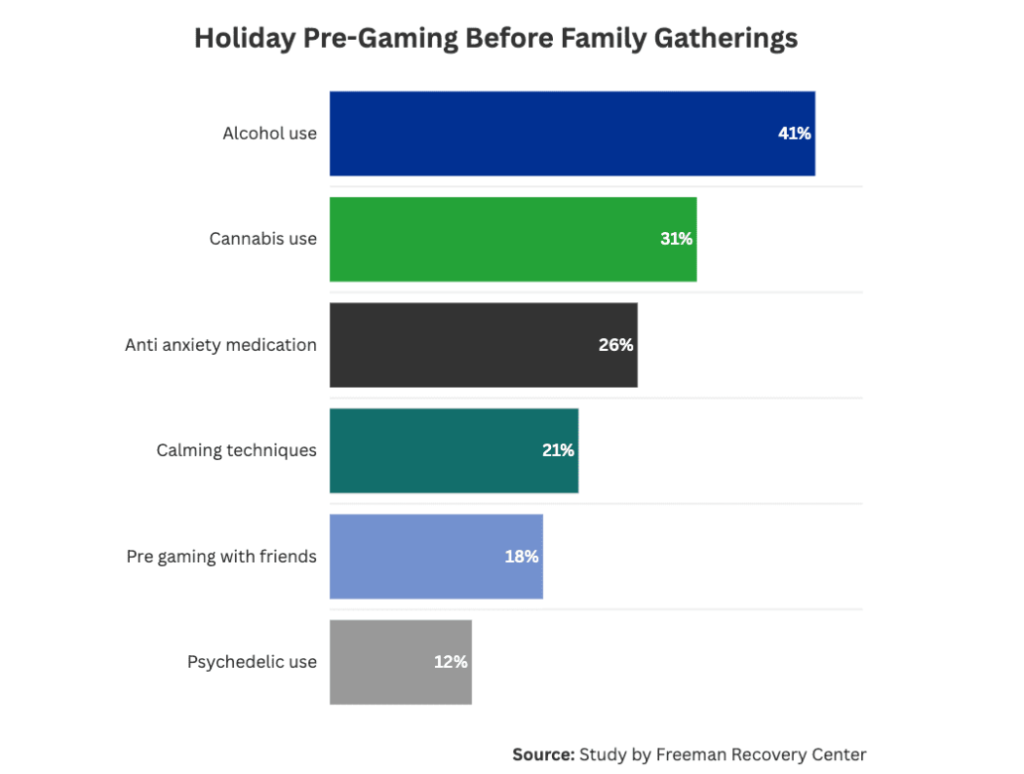
Every family has its holiday traditions. For some, it is matching pajamas and sugar cookies. For others, it is a “quick walk” around the block before the ham comes out of the oven. According to new survey data, that little stroll is not in your imagination. Roughly one in three Americans now say their holiday pregame routine includes cannabis before sitting down with relatives, and about half of all respondents “pre-game” with something – usually alcohol – just to take the edge off long before the first toast is poured.

The Freeman Recovery Center surveyed more than 1,000 people and found that substances are not just showing up at parties, they are being used to emotionally brace for them. Alcohol still holds first place, but cannabis is a strong second, especially among Gen Z and millennials who report higher rates of using marijuana to manage holiday stress, family expectations, and financial pressure. If you want to see the full breakdown of cravings, loneliness, “emotional hangovers,” and pregame habits, the center’s report on holiday substance triggers is worth a close read: Holiday Relapse Triggers & Emotional Stress | Freeman Recovery Center.

None of this means the winter holidays have turned into a nationwide intervention waiting to happen. It does mean more people are quietly admitting that large gatherings, grief anniversaries, and money worries can be a lot. Some turn to drinks, some to cannabis, and some to healthier coping tools like boundaries, routines, or stepping back from certain events altogether. Seen that way, the “pregame” is less about rebellion and more about how Americans are trying — sometimes clumsily — to get through a season that is supposed to be joyful but does not always feel that way.

From Cousin Walks to Cannabis Conversations: How Norms Are Shifting

If you grew up hearing whispers about the “cousin walk” before dinner, you might notice that the whispers are getting quieter. With more states embracing legal cannabis and more adults saying they have tried marijuana at least once, the idea of using a little THC before a tense family gathering no longer shocks the room. For some, a discreet vape or gummy has replaced the third glass of wine. For others, it is simply another way to feel a bit more relaxed while staying present for the people they love.

At the same time, the cannabis conversation itself is maturing. People are not just trading strain names anymore; they are talking about research, regulations, and how different products fit into their lives. If you are curious about how science is looking at cannabis beyond the holiday punch bowl, our piece on what new lab research says about THC, CBD, and ovarian cancer cells is a good example of how nuanced the discussion has become: When Lab Dishes Start Asking Big Questions About Cannabis and Cancer. It does not promise miracles, but it does show how seriously researchers are studying these compounds.

Put all of this together — the survey data, the cousin walks, the lab dishes — and you get a clearer picture of where cannabis stands today. It is no longer just a punchline or a panic headline. For many adults, it is one tool among many for managing stress, unwinding, or marking special occasions. That does not erase the risks, especially for people with a history of substance use or mental health concerns, but it does explain why cannabis is showing up more often in pregame stories and fewer people are pretending it is not there.

Holiday Hemp Drinks, Future Rules, and Planning Your Own Pregame

Just as the culture is getting more comfortable talking about holiday cannabis use, lawmakers are busy rethinking the rules that govern hemp-derived THC products. You might have seen the headlines about potential federal changes that could limit or reshape the infused drinks and mixers that many adults now keep in their fridge. If you have not, our breakdown of the policy chatter is a good place to start: Looming Federal THC Ban: Why Stocking Up on Hemp Drinks Matters Now.

There is also an ongoing debate about how enforceable those kinds of rules would really be, given the size and diversity of the hemp market. For a deeper look at that angle, you can dig into our follow-up here: Why the New Federal Hemp Ban May Be Unenforceable – And Why Stocking Up Now Makes Sense. Between the survey showing that one in three Americans now pregame with cannabis and the policy talk swirling around hemp drinks, one thing is clear: this category is not a fad, it is part of how many adults organize their social lives and self-care.

If you are in a legal state and already an adult who enjoys hemp-derived THC drinks, your best “holiday hack” is still the boring, sensible one: know your limits, respect your mental health, and choose products from brands that take testing and compliance seriously. Crafty’s low-key mixers and hemp drinks were created for exactly that kind of mindful moment — the night you want something more relaxed than a cocktail, less chaotic than a last-minute panic pour, and fully aligned with local laws. Whether you are hosting, pre-gaming, or skipping the party altogether, planning ahead now means you can spend the next round of holidays focusing on the conversations around the table, not the chaos in the background.